
Program Lifecycles
Each season of your life calls for a different transformation
Traditional Ayurveda, as described in the classical texts, outlines each of these stages in detail. I’ll guide you through yours, using a protocol tailored specifically for you. And when exhaustion or burnout sets in—no matter what stage of life you’re in—that’s where we’ll start.
I Menstrual Cycles · II Fertility · III Pregnancy & Postpartum · IV Perimenopause · V Longevity
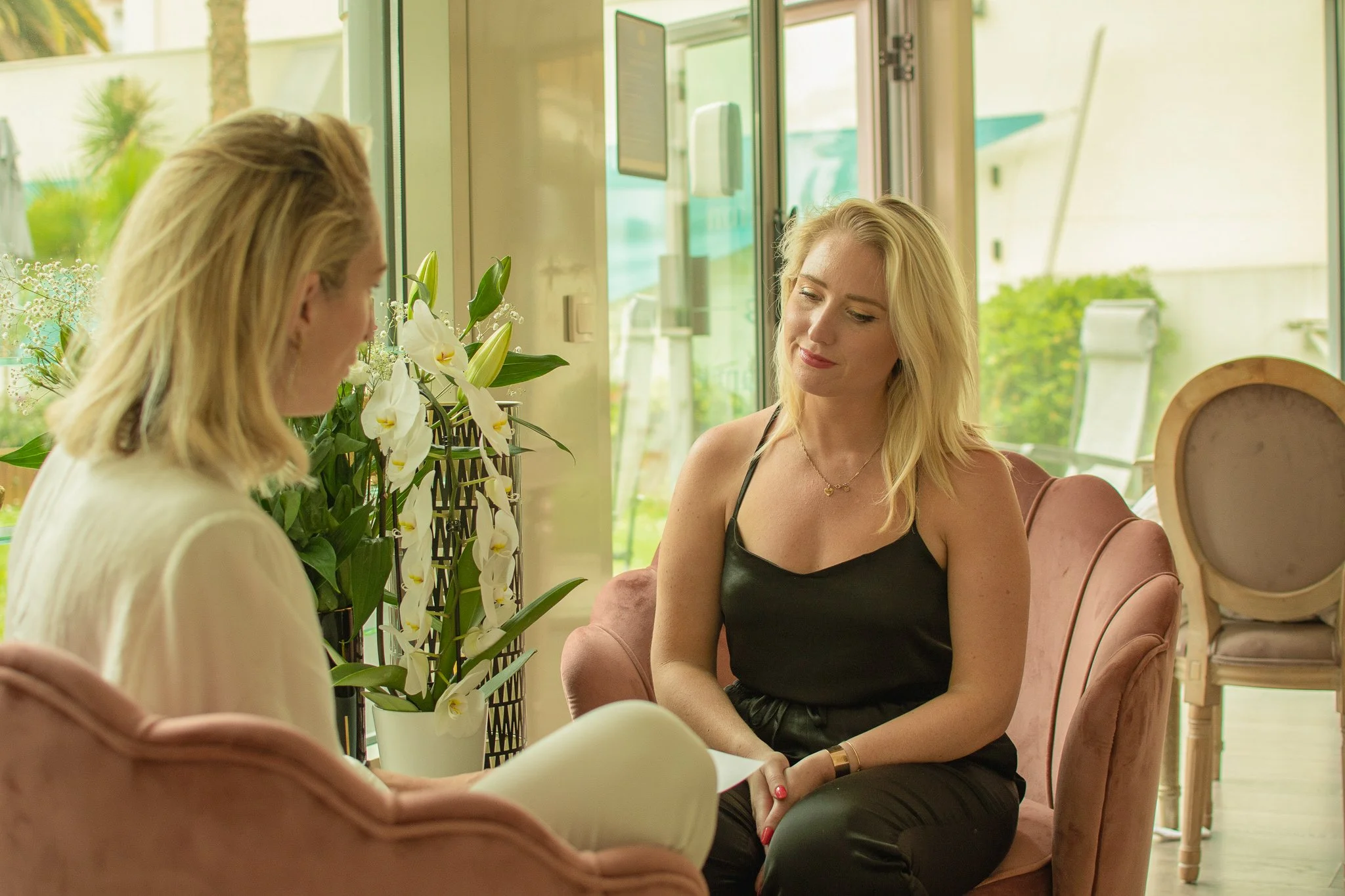
Why Haute Couture
Nothing standardized
There is no standard protocol. Every recommendation is based on your assessment: your constitution, your stage of life, and your personal story. These recommendations cannot be applied to anyone else. That is where the strength of Ayurveda lies.
Regular sessions. At each session, the protocol is reviewed, adjusted, and refined. It is an ongoing dialogue between you, your body, your perceptions, your well-being, and Jayadā, which supports the rebalancing process.
A very small number. A limited number of women are accepted each season; no more than four participants per Ayurvedic retreat (Panchakarma), in an intimate, secluded setting in Cabris, in the hills behind Grasse.
At home, if needed. Sessions are available online or at my practice in Paris or on the Côte d’Azur; home visits are possible from Saint-Tropez to Menton.
Getting Started
Three steps
- 1
The form
10 minutes to tell me where you are and what you'd like to see changed.
Fill out the form - 2
A free Zoom call
30 minutes to get to know each other and see if we're a good fit to work together.
- 3
Your program
A 6- or 12-month Lifecycles program. It begins with an in-depth assessment, which is included.
Or a 360 Consultation: a comprehensive, one-time assessment to take stock of your situation and receive personalized recommendations (€350).
The programs
Three formats
6 months without a retreat
When a " retreat " isn't the right moment
- Follow-up sessions
- Protocol adjusted at each session
- Daily Cycle
Ideal during pregnancy, if a pre retreat s is contraindicated, or if you live abroad.
6 months with one retreat
A Season of Transformation
- Follow-up sessions
- One Panchakarma retreat (accommodation included, up to four participants)
- Follow-up after the retreat
Ideal for menstrual cycles and preconception.
12 months with two treatment courses
A Year to Become
- Follow-up sessions
- Two cures in opposite seasons
- Follow-up after each retreat
- Protocol adjusted each season
Ideal for perimenopause, longevity, and deep transformation.
Investment discussed during the free 30-minute discovery call.

Good to know
Tailored to your season
Cycles: a simplified protocol, optional home rituals, and a short-format retreat.
Pregnancy and postpartum: The " retreat " is replaced by six days of home care for you and your newborn.
Perimenopause: Beyond the Symptoms—Support That Can Also Help You Reinvent Your Life.
Longevity: Longer treatment sessions are possible for more in-depth work.
Partner option: assessment, protocol, and follow-up for your partner, in addition to your own.
Which season brings you here? Discover each one below; every program can be tailored to meet your needs as closely as possible. Would you rather start with a retreat? Panchakarma →
I · Cycles
Menstrual Cycle and Hormonal Balance
Your menstrual cycle is a language. Let’s learn to read it.
For you if
Your periods are irregular, painful, or difficult to cope with; the days leading up to your period are stressful; you're coming off the pill; you sense a connection between digestion, sleep, emotions, and your period.
The Ayurvedic View
The cycle (ārtava) reflects your overall state. It is divided into three phases, each associated with a doṣa: menstruation (vāta), the phase that follows (kapha), and the phase before menstruation (pitta). The doṣa that dominates your cycle determines the entire treatment plan.
How I'm Approaching This Season · 6 Months
Months 1–2 - Two cycles observed in the journal. Rekindling agni (digestive fire and metabolism), digesting āma. Daily rhythm, a break during menstruation, and traditional home care afterward.
Month 3 - Panchakarma retreat, performed after menstruation (never during), tailored to your dominant doṣa (constitution and imbalance).
Months 4–5 — A gradual return to a full diet, a consolidation phase focused on rasa dhātu. Herbs are adjusted from one cycle to the next.
Month 6 - Autonomy: a written roadmap, phase by phase and season by season.
II · Fertility
Preconception, for You and Your Partner
Preparing the ground.
For you if
You are planning to become pregnant within the next 6 to 18 months; you want to prepare for it, either on your own or as a couple; you are undergoing assisted reproduction, in consultation with your medical team.
The Ayurvedic View
The classical texts describe four conditions: timing (ṛtu), the environment (kṣetra), nutrition (ambu), and the seed (bīja). We work on all four, as well as the mind (manas), to achieve a complete reset that supports a fulfilling pregnancy.
Partner Option —assessment, protocol, and follow-up for your partner, in addition to your own.
How I Approach This Season · 6 or 12 Months
Months 1–2 - Preparing the ground: agni, āma, rhythm. Removing what weakens the seed and the ground.
Month 3 - Preconception retreat. Your partner can follow their own plan at the same time (couple's path).
Months 4–6 - Nourishing the reproductive tissues. Understanding your ṛtukāla and determining the timing of your first attempts.
Months 7–12 — Support during the attempts, then through the first trimester.
This program does not guarantee pregnancy and is not a substitute for medical care.
III · Pregnancy and the Postpartum Period
From pregnancy to the months following birth
Being held while you carry.
For you if
You are pregnant—regardless of which trimester you're in—and would like month-by-month support in addition to the care provided by your midwife; you're worried about feeling exhausted during the first few months—or are already feeling that way—and want to prepare your body for childbirth.
The Ayurvedic View
Garbhiṇī paricaryā outlines specific practices for each of the nine months: diet, daily routine, calmness, and practical preparations for the weeks following childbirth. After childbirth, vāta is heightened, agni is weak, and the tissues are depleted; the sūtikā period, lasting about six weeks, addresses these conditions with warmth, oil, rest, and nourishing food.
No retreat , and no massage during pregnancy. Instead: six days of in-home care for you and your newborn after the birth. For you: daily abhyaṅga with warm oil, belly wrapping, warm and easily digestible meals, and rest in a safe environment. For your baby: a gentle oil massage. In consultation with your midwife or pediatrician.
How I Approach This Season
1st trimester - A diet tailored to nausea and fatigue. Rest, routine, calm.
2nd trimester - Nourishing your child’s growth through your diet; your cravings are accommodated with care.
3rd trimester - Supporting apāna vāyu in preparation for the birth. Preparing the room, the meals, and the people around you. Option to add a few in-person sessions to prepare for the birth and learn about Ayurvedic rituals for a gentle delivery.
The 6 Days - Home care for mothers and newborns around the time of birth (Paris and the Côte d’Azur; elsewhere in France for an additional fee).
Weeks 2–6 — Transition from light to more nourishing foods, at a pace that suits your digestion. Support for breastfeeding. Help in coping with the baby blues.
Months 2–6 after childbirth —Tissue repair, sleep, and emotional balance. The return of the menstrual cycle.
IV · Perimenopause
The Transition to Menopause
A transition, not an ending.
For you if
Your cycles are changing; your sleep, mood, energy levels, and sensations of heat are fluctuating; persistent fatigue—even exhaustion—is setting in; you want to prepare for these changes rather than just endure them.
The Ayurvedic View
Perimenopause marks the transition from the age of pitta to the age of vāta. Heat and irritability are accompanied by dryness and light sleep. With the right support, this transition becomes a new way of experiencing your body and listening to what it has to say. It is the ideal time for purification regimens, followed by regeneration, over a 12-month period.
How I Approach This Season · 12 Months
Months 1–3 — Calming the most active doṣa, regulating agni, establishing a sleep routine, and practicing abhyaṅga or other daily rituals.
First, retreat —a purification regimen in the spring (March) or fall (October), followed by a rasāyana phase.
Second retreat — retreat s from the previous season, focused on strengthening, four to six months later (possibly before or after summer, or in early winter), followed by a new rasāyana.
Final Months - A Life Plan for the Coming Decade.
V · Longevity
Vitality and Serenity After Menopause
To endure and to thrive.
For you if
You have gone through menopause and want to maintain your energy, sleep, mobility, and mental clarity for the decades ahead.
The Ayurvedic View
This is the age when vāta dominates: dryness, lightness, and more fragile sleep. Āyurveda devotes one of its eight branches, rasāyana, to regeneration and longevity: nourishing the tissues, maintaining suppleness, preserving ojas, and sustaining the mind.
How I Approach This Season · 12 Months
Months 1–3 - Calming vāta: warmth, oil, regularity. Sleep rhythm, daily abhyaṅga, nourishing food.
First retreat —A gentle retreat, tailored to your strength, followed by a rasāyana phase (available year-round).
Months 6–9 - Nourishing bones, joints, and memory through food, herbs, and movement.
Second retreat - The other season’s retreat, and a rasāyana plan for the years ahead.
Testimonials
In their words
A few months ago, I decided to try Āyurveda for skin and hormonal problems. After a long initial consultation, Jayadā suggested a Panchakarma retreat. I agreed and followed her recommendations. After the retreat, my skin problems disappeared, as did my hormonal issues, which had been very debilitating… I had never turned to Ayurveda before, and today I can’t live without it—whether in my diet, the way I cook, or the herbs and spices I take every day. Since I’m planning to get pregnant, I already know I’ll be turning to Jayadā. She’s a very attentive practitioner—a thousand thanks again. I recommend her without hesitation.
I had an amazing pregnancy thanks to Jayadā’s wisdom and guidance! She led me through a Panchakarma cleanse before I planned on trying to conceive, about six weeks including the cleansing period and time to rebuild with nourishing food and herbs. I felt strong and confident, and became pregnant on our first try! She then wrote recommendations for each trimester, and after a natural home birth she had a postpartum protocol for me along with daily rituals for my son.
Jayadā is magical. She managed to resolve some really difficult health issues I was facing (kidney pain, breast congestion, perimenopausal symptoms). I truly felt uplifted—both physically and mentally—after our retreat. Life has become much more enjoyable again. She listens carefully and truly creates a tailored, personalized treatment plan to meet your individual needs.
I took a three-day “ retreat ” with Jayadā and her team. I was physically and mentally exhausted. With gentleness and constant kindness, Jayadā provided me with care of unparalleled quality that brought me true well-being. Her in-depth knowledge of Ayurveda and Sanskrit gives her rare expertise and exemplary professionalism. She knew exactly how to guide, advise, and support me. Every treatment is performed with perfect mastery. The retreat was truly tailored to my needs. You can let go with complete trust. I was a different person after my retreat. I plan to do another retreat in the fall, and I can’t imagine for a second that it wouldn’t be led by Jayadā!
Frequently asked questions
-
Because the body changes gradually. The first few months lay the foundation; the following months build on that foundation and help the changes take hold.
-
Set aside 30 to 60 minutes a day at first (for meals, your routine, and journaling), then less as the habits become second nature.
-
Online, and occasionally in person in Paris and Cannes. The treatments take place in the South of France. Home visits are available on the Côte d’Azur if needed.
-
Most of our clients are women, but we naturally also work with men, both in programs and in treatment courses.
-
Yes. The partner option includes an assessment, a protocol, and follow-up sessions in addition to your own; your partner can also join you for the retreat.
-
I'll be there for you month by month, with no- retreat s during your pregnancy. After the birth, I'll provide six days of in-home care for you and your newborn.
-
No. The program is complementary and never replaces medical care.
-
Yes. Payment plan options are discussed during the discovery call.
Answers to the questions we’re asked most often about the programs. Have another question? We’ll discuss it during the discovery call.
Ayurvedic programs are not a substitute for medical advice, diagnosis, or treatment. They complement your medical care (doctor, gynecologist, midwife).